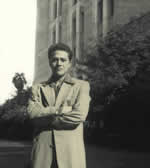
A chronicle of Arturo Granda
Today the name of Carlos Castaneda is not popular. However, in times of libraries hippies and psychedelia gringas sixteen thousand copies a week sold its first book: The Teachings of Don Juan: A Yaqui Way of Knowledge, translated into English as The Teachings of Don Juan. Few know that those pages were the doctoral thesis in anthropology of Carlos Castaneda at the University of California. The book was so strange and fascinating Federico Fellini announced his intention to make a film based on it but had to abandon the project after receiving death threats. Castaneda had become a celebrity, the United States was in turmoil over the war in Vietnam, and everywhere spread the creed of the pacifist rebellion. Reading Castaneda was immersed hallucinatory world of Mexican Indians, with whom the author claimed to have discovered drugs expanders of consciousness as the peyote, mushrooms and datura. Time magazine ordered a worldwide hunt for Don Juan Matus, the Yaqui Indian as Castaneda had guided him in learning the shaman, to confirm if he really existed or was a figment of the author. Faced with unexpected fame, superstar anthropologist decided to erase his personal history, declared Brazilian, Chicano, or gypsy, if not the reincarnation of an Egyptian pharaoh, and hide behind pseudonyms such as Salvador Castaneda, Isidoro Baltazar and Joe Cordova. Collective suspicions hiceron not wait. Who was really Carlos Castaneda? A spiritual guide? A storyteller lucky? A rampant fraud? The dictionary of characters would say that Castaneda was first of all César Arana, a Peruvian born on Christmas Day 1925 in Cajamarca, a student at the School of Fine Arts in Lima, who traveled to the United States, changed his name to Carlos Castaneda and without the "ñ" - sold eight million copies of his first book and was inaugurated as the spiritual father of the New Age. But following in the footsteps of Arana is also slipping in a box of stories china confusing. Arturo Granda, Peruvian journalist and columnist of the magazine Etiqueta Negra colleague has discovered letters and photographs unpublished, and written a profile less misty Castaneda through conversations with family and friends. The great shaman died in 1998.
1. The door bell is inscribed "Family Arana." The house is in the district of Los Olivos, a neighborhood populated northern cone of Lima. While eager to touch the door, I remember the gentle voice of the woman who days before I attended by phone. When I confirmed that she was Lucy Chávez Castañeda, I knew my search last month was over. The house is pink and two floors, and Arana family rents a three pieces of it. Lucy is a retired obstetrician who live on their severance pay and that of her husband, Carlos Arana, a retired jeweler. As the door opened, the petite lady that I receive is even more gentle than it was by telephone. It is one of the ladies why one would be adopted as a child and whose kindness makes strong women unsuspected hiding. He says he was born in Cajamarca, and grew up as a sister with whom he would later be Carlos Castaneda, but is actually his cousin. "His parents were mine," he says with his voice calm. Flipping through your family album, I show pictures of Castaneda, ie César Arana, while I was growing up. At home he was called "The Black" by the cinnamon color of their skin, a legacy of Susan, her mother. His father, a watchmaker, inherited his quest for knowledge. There is in almost all his portraits a stern look, the coat of a quiet boy and lonely, but strong ideas to which he would not ever give up. "Now that Caesar is dead, I feel the freedom to have things I never said," Lucy tells me, answering my question of why so many years of silence. "I thought if I had throughout its history it would bother me." And for decades, admitted only answer some questions to the press.
2. One day in February 1973, a Time magazine correspondent went looking for Lucy with some pictures, and asked if he could recognize in them a man. In all there were the strange paradox that it showed in hiding, like a playful child who hides behind his left hand or as a private detective under a Panama hat in a library. Lucy saw these pictures at work, the clinic Maison de Santé, until one of them froze the breath, under a hat and behind a black book horizontally, recognized the smiling eyes of a man who seemed to enjoy playing hidden. It was the unmistakable face of his brother, whom he had last seen twenty years ago, the day he left the United States on a boat. Time correspondent said that the man calling himself Carlos Castaneda. I did not know his brother was alive or that it was changing its name, much less imagined it to be so famous. The reporter told him that he owed his fame to his books on anthropology, and that Time had sent him to see if Castaneda was really such a César Arana, whose entry into the United States was in 1951. Lucy told the reporter that the death of Arana's mother had precipitated his departure, and when she died he locked himself in his room three days without tasting food. What is not entrusted with Time reporter Cesar Arana is that not only had gone to the funeral and was dressed in mourning, but leaving the closure of three days in his room said, "Now. I have no more reason to stay." A month after the visit of the reporter, Time headlined on its cover: "Carlos Castaneda: Magic and Reality." His father had died three years ago, absolutely convinced that if his son had not returned to write another letter, it was because he had to be dead.
3. Castaneda's strategy was the disappearance. For thirty years, gave interviews to more than a dozen reporters and allowed him to tomasen photographs, except those published in Time Eddie Adams, that series in which he hid his face, and more homemade Margaret Runyan published in a book. "Their closest friends are not sure who he is, "she wrote, no less than his former wife. It was a publicity stunt. It was true. I used to phone his friends at any hour of the night and hang them if an answering machine answered . It gave them your address and phone number, and only trace was a post office in Los Angeles, or the name of a contact, sometimes his literary agent. His editors at Simon & Schuster, Penguin Books and Gallimard I agree that Castaneda said he was in town when in fact it was in another, always chose the time and unusual places for dealing with them, leaving one person planted if its appearance was not reliable, which could take months to respond to messages regardless of what country they were, it was undiscoverable every time a new book. In one of his appearances before the press said that for some years there was no way to contact you because of your dedication to gardening in the mountains of Guatemala. And immediately he left.
was so unknown impostors who had lectured on his behalf. It was once one of them and at the end of it went to greet the "Dr. Castaneda." He preferred to appear incognito among the public presentations of their books and giving lectures when rehearsed voices in all shades and almost never left record. One of the translators said they spoke English like a gringo, language peppered with words in Portuguese, which dominated at will the English, using idioms of any Latin American country that became a national unidentifiable. Once said about fame then harassed him: "This is nothing to Carlos Castaneda. Personality is a pretense." Fame? Success? Who cares about that shit? ". Despite living in the upscale suburb of Westwood, near Universal Studios, there was nothing further from him that the cameras. The only time he appeared in a video was towards the end of his life, when a couple footed shot it removing trash cans from home.
4. César Arana's dreams always traveled throughout North America. "She never told me why," says Lucy. Just talking about his dream of being there. " She agrees this mystery, like Arana classmates with whom he had spoken earlier. One of them, Oscar Posadas, told me that always seemed curious Arana's obsession to learn the English language. "We will listen to English," I heard that every time I intended to go to the movies. The late drama Ollanta, a half block from the Plaza de Armas in Cajamarca, was his first academy of the language. Although his father recalled that as early as two years old César Arana spoke a strange language, one that, belatedly, discovered that it was a sort of English.
5. The man named Simon Rios, and his insistence on playing the bell of a house in the Westwood neighborhood in Los Angeles, he received only answers deaf and neighbors onlookers. Defeated walked away down the street when he saw a guy dressed in tails, top hat and cane swing, thought it was one of those that carry advertisements in the back. A second look sowed your question, before finally recognize the former schoolmate San Ramón de Cajamarca was looking for. "Fashturo" shouted his friend's nickname among shocked and distressed by the fear that he disappeared around the corner. The type of frac hurried across the street, gesturing to quench his effusive: "Ssshh, please shut up, brother, here's a respected person. For people in the neighborhood I'm the doctor." Simon Rios Carlos Castaneda had caught one of their performances, those who practiced to disappear behind the mask and delete characters and their personal history, considering the teachings of Don Juan.
6. Sometimes it was Castaneda who approached people he admired. Alejandro Jodorowsky, tarótologo and cult filmmaker, told an evening dining in a restaurant on Avenida Insurgentes Mexico City, where since its bloody steak she went to a man who believed he was a waiter. "Was short, stocky, with curly hair, flat nose and the skin slightly chopped, a humble-looking man, native," says Jodorowsky in his memoirs. He said it was Carlos Castaneda and had seen the movie several times mole. Jodorowsky says he was a fraud dismissed by the restful tone of his voice, his delicate pronunciation and, above all, by vibrating light of his intellect. Some time later confirmed, for some pictures and drawings, that the man who was chatting with him that night was undoubtedly Castaneda. When Mario Vargas Llosa was professor Visiting UC Berkeley, received Castaneda, who said he had gone on foot from San Francisco, about three hundred miles, only to have the pleasure of knowing.
7. One afternoon I came to school San Ramón de Cajamarca to find on a shelf of old records of letters. A former employee of the school with uncapped bottle encouragement helped me to delve into the books and told me that the files of the students had been burned. "A performance over Castaneda" imagined. César Arana figure until 1942 with regular notes. Nothing fancy. Rather than their qualifications, highlighted by her right pointer speed football team of the school children, where Lucy was going to see every Sunday with his father. One night I said by telephone he had found a couple of medals that his brother had won at school athletic competitions: one in the fifty-meter dash, the other had recorded an athlete throwing a javelin. When school finished third Arana sold off its bronze green school uniform and went to Lima. Apparently never returned to Cajamarca.
8. Lucy returned to find his brother when the family was forced to move to Lima due to rheumatic heart disease which had prostrate Arana's mother. In Lima formal shy teenager that had become a charming young man, amorous and talkative. Para entonces, César Arana había terminado sus estudios secundarios en el colegio Nuestra Señora de Guadalupe, el más antiguo de Lima. Una tarde fui a buscar allí los rastros de su historia escolar. Las señoras que me atendieron no podían encontrar sus notas durante horas, y estuve a punto de pensar que era otra pista falsa. "Parece que se nos está escondiendo", me dijo una de las empleadas administrativas, hasta que al final de la tarde lo halló en una esquina, debajo de una pila de registros que se habían salvado de una inundación.
Sus notas del último año de secundaria demuestran que el colegio era para él sólo un trámite obligatorio. Sobre doce materias cursadas no se había presentado four, and other notes are below a mediocre thirteen. In 1944 someone would write books of poetry and reflective dimension eleven earned a philosophy. A final examination of religion and English never showed up. A similar story came when I went to get their qualifications to the National School of Fine Arts in Lima: Arana failed the third year of drawing and painting, was postponed in the first year of sculpture. "I never saw him doing an" I told a cloudy morning, the artist Victor Delfin, in his workshop overlooking the sea in Barranco.
9. Friends who saw him in his last days in Lima could not say goodbye. One of these days, Arana knocked on the door of the house of Jaime Ravines, his childhood friend, with joyful urgency that comes to tell you who has won the lottery. "I've got a gringa who wants to marry me and that will solve our tickets," he told his old school folder in San Ramon. "Why, yes, I said that without you I will not." It was postponed many times the opportunity to travel to the United States. But that did not excuse Ravines is because their partner was pregnant. "I can not leave it on," he said, and had no time for more explanations. The door closed behind him and Cesar Arana never reappeared. Was there such a gringa
really? When I told Lucy, laughed as if it were used to collect rumors about his brother. He said he did not know that a woman had to do with his departure. It was an afternoon when I realized that Lucy knew that her brother was a storyteller, but he could never ask. Just remember that the day he left for the United States came home in a hurry, put four things in a bag and promised to write. It was a morning for San Francisco in a ship that sailed from Callao, a freighter of the Peruvian Steamship Corporation from which he wrote his first letter to the family, two days later at his stop in Talara. Lucy is still a mystery where he got the money to travel.
The day I talked with Victor Delfin I thought I had found a response. She confided that a month after the departure of Arana, a fellow of Fine Arts, Tita Ordóñez, was looking very worried. "Hey, you've seen?" Dolphin asked. She had given some blankets Cusco Arana, a day he said he had few clients interested in them. The other source to finance his trip was to work on the boat. After talking with Dolphin thought that there was there was a woman who unwittingly helped finance the departure of the prophet who would later be Carlos Castaneda. Only it was not gringa. Peru was well.
10. The night I visited Mary Carhuapoma, she recalled the day that Gina Lu came to the house of passage Sebastián Barranca, two years after Arana depart. Goddaughter Mary was his mother, lived with the family for years, having opened the door. Gina Lu that day had gone to meet the father of Castaneda, who surprised her daughter telling her it was, they were married by a power sent from the United States by his son and the girl in his arms and was called the daughter Rosario of both. She told him she had met while studying Fine Arts and that he introduced his family because they were convinced Roma. Lucy
then told me that her brother sent a letter asking for the truth of history. He said: "love her like a sister. That China is whack." Richard de Mille, a researcher who spent part of his life to two books dealing with fake Castaneda, recounted this episode in his book The Don Juan Papers, a meritorious work yet town of assumptions, inaccurate and sometimes tendentious ultimately seem to have favored the aura of mystery around Castaneda. Gina Lu called "Dolores" and his daughter Rosario, "Hope." Said Castaneda's daughter grew in a convent, and that the mother had been an innocent victim of Arana. Speaking later used by the sculptor Victor Delfin, who had responded in an interview that Arana was "a seductive front-line" and if you read The Don Juan Papers feels as if these statements Dolphin give him reason. Did Arana when he traveled to the United States was going to have a daughter, Gina Lu?
The facts seem to be condemned. One day I asked James if he knew this story Ravines. "No, but Caesar loved children and I am sure that, had he known he would not have ever gone." Who was always aware of them was Lucy, who told me that Rosario had grown up next to his mother and not in a convent, that it worked in the newspaper La Prensa and even lived in Lima never remarried. A Lucy attended the wedding night was that of Rosario Arana Lu, who in 1975 married a Swiss. It was when he learned that he would move to Europe with his mother. One evening at home, sitting on her blue sofa, Lucy told me what had happened the last time you saw Rosario. Before leaving Lima she said, like one of those secrets worthy of his father, who would look to the United States. He also said that he would use the surname of her husband Rolf Peter and he was going to submit to Castaneda disguised as a journalist.
11. A the evenings when I visited, Lucy out of his bedroom with a bag and pulled out in front of me a score of letters scattered on the blue sofa in her living room. It was Cesar Arana unpublished letters he had written to her plus one day he found in a trunk after the death of his father. In The Don Juan Papers, De Mille says that Castaneda "seldom wrote to his father, but that afternoon Lucy told me about the extensive correspondence that they held, which retains only a fraction. The stamps on the envelopes had addresses neighborhood of San Francisco and Los Angeles. I saw that in the fifties his letters arrived dated and handwritten on sheets of notebook school or onion, which came in the next decade typewritten on white sheets and the only dates are those of the postmark of the envelope. Arana's handwriting is drawn, without amendments or deletions. Do not worry about the accents, which apparently has been abandoned since it is at the University of California. I noticed that Lucy saw through his letters to his brother. Its kind of gave me warnings when was the fear of who emerges from the only memories that remain. The dates of his letters are the chronology of how Arana is disappearing before his family, but especially the revelation of an unknown Castaneda. The nostalgic child promises to return one day Cajamarca his father became the confidant of reflections on mankind, from someone who is giving a talk about himself. His letters came for seventeen years Sebastián Barranca passage 121 h, in the neighborhood of La Victoria, until one day it just did not get more. Lucy estimated that his brother left to write by the time he appeared in California The Teachings of Don Juan.
12. He had visited about five times the house of the sister of Castaneda and treatment of us was becoming increasingly familiar. One of these days, at dusk, I began to review the correspondence of César Arana front of her. There was an undated letter that Lucy remembered as a of the last who came to Lima. Is a key letter to terminate the controversy over how much truth and how much fiction is in the works of Castaneda. "Imagine I have written a novel!" Arana writes his father, announcing that over, which seems rather heavy and the work that has cost not tossed out the window. "This novel is very personal for me. A man advertiser has read and wants to publish it in September or October." He added: "I'm making no hurry, but the idea of \u200b\u200bpublishing one's hair makes me happy. But I have learned over many years to never think about the future. To publish the novel or not published and no interests. excitement of writing, the emotion of wanting to publish it, and it gives me enough. "Was this" novel "The Teachings of Don Juan?
13. To our knowledge, Castaneda lived the early psychedelia dedicated to researching and writing his doctoral thesis for the University of California. Lucy assured me that despite the intimacy that united them, Arana had never told her father or her about Don Juan Matus and less about his initiation into shamanism. Is not this letter proof that Castaneda's anthropological work was more fiction? His critics, especially his pursuer Richard de Mille, could read this story, see finally test it short of his theories about the invention of Don Juan and die in peace. But his remarkable advocate Octavio Paz had ruled that, if that book was fictional, the meaning of Castaneda's work was the same: an ethnographic document with undoubted literary value. "Yes, there is invention in his work, but I'm sure you lived the experience," she said one morning Victor Delfin. Those who have read Castaneda and experimented with ayahuasca or peyote agree with me that vivid experiences as he recounts simply can not be fabulous.
14. When American Express offered a million dollars to announce their credit cards for fifteen seconds, Carlos Castaneda refused. Fausto Rosales, Diana editor was lucky enough to treat it in person, always insisted that money was a trivial matter for the writer and it was never intended to live like a millionaire. Apparently had a healthy life and two cars, a pick up cream and a brown four-door Ford. It is known that long Castaneda karate practiced daily and always exercised to keep the athleticism he had achieved in his youth. Those who knew him testify that they never encouraged drug use, did not smoke snuff and not used to drink alcohol or soft drinks. His former wife, Margaret Runyan Castaneda was recalled that a good cook and cut his hair himself. But he also mentioned that she believed that Don Juan Matus, the name of the character of the work of the anthropologist, would have a curious origin in a Portuguese wine whose brand was Mateus, who liked to Castaneda, and that on one occasion that she drank heard to say: "From here, the wine from the magic and knowledge of the universe." Baudelaire would have agreed.
15. Castaneda said he was from Brazil, Chicano, and Gypsy to a Portuguese scholar, a Persian prince, the reincarnation of an Egyptian pharaoh. He also said to have ten years younger advantage of his athletic bearing and air youth was the same as telling his neighbors that if it was sexagenarian Westwood was not noticed. César Arana belonged to the lineage of fabulous wonderful. "I would say he invented the truth," it said Jose Bracamonte, a graphic artist who attended the Fine Arts and which met in Lima after the famous issue of Time. "I remember we talked. Furthermore: Monologue. His mythomania was great, bright. I haunted the game, every game. The invented just to keep betting." Arana was not a liar either but rather an architect of lies, with an inventiveness that allowed him to appeal to any audience. Dolphin
always remember in the first courtyard of Fine Arts, surrounded by students who held hostages with stories. Also as a makeshift watch seller who bought in the market and sold the stop after an artistic work of beautification. A week after fellow Arana sought to claim that their watches had stopped forever. "We were young and did it as a game to get money," he said smiling dolphin. Bracamonte recalled that Arana had convinced him and his friend Carlos Reluz to travel to Brazil with the idea that there were great things to do, and promised to send Arana silver and catch them. After a few months became convinced that money and the inspiration for this adventure would never come.
I have no doubt that Castaneda fabulous nature originated as a child and was called Cesar Arana. His sister told me that he spent whole days eating Caesar adventure magazines confined to his bedroom. "We had fabulous stories as he left his room," recalls Lucy. That was why his school in Cajamarca earned the nickname "Fashturo." It was the nickname of a village drunkard whose only relationship to Arana was the manufacturer of lies.
16. One night, a friend phoned with the news Lucy's death Castaneda. "I still had hopes see it, "she tells me, with that illusion off, remembering that night when she cried. In San Francisco, his son had learned from television news about his uncle. Just arrived in the United States, was adapted to live there and this story ended with plans to meet one day the brother of his mother, whom Lucy had spoken like a fable. You must have remembered those Sunday afternoons, when his mother appeared with the letters of his uncle at the dinner table familiar. "If we never see again, always remember that you are the beginning and end of all my thoughts," Castaneda had written him a letter.
17. His lawyer announced death to the press occurred two months after. His body had no funeral or public ritual. He was cremated hours after his death and his ashes scattered at will, somewhere in a desert of Mexico. Died of cancer before it has published a new edition of The Teachings of Don Juan to celebrate the thirtieth anniversary of its original publication. At least, this is the official version.
His will, which decided the fate of several million dollars for the rights of their books, was amended three days before his death. Excluded from it to his adopted son, Jeremy Carl, and mother, Margaret Runyan. For them Castaneda had become a prisoner of his companions of worship, three women who have controlled his last days. The death certificate attributed an unexpected job: "Teaching in the school district of Beverly Hills." It seemed a joke. When the press investigated the matter, found that was not on the lists of teachers in that district. No doubt that was the last performance of Castaneda. m
1925. Carlos Cesar Arana Castaneda was born on 25 December in the city of Cajamarca in the northern highlands of Peru.
1942. Ends ninth grade at the Colegio San Ramón de Cajamarca, the last year that it would consider in his hometown.
1943. It moved to Lima to finish high school. Arrives at the house of his uncle Francisco Arana, in the passage Villacampa, the antique district of Rimac. Is in his senior year at the National College Our Lady of Guadalupe.
1944. Arana finished his secondary education at the National College Our Lady of Guadalupe.
1945. Her mother, Susana Castañeda, rheumatic heart disease is treated. You are prohibited to return to Cajamarca, fearing for his life.
1947. Login to study drawing and painting at the Escuela Nacional de Bellas Artes in Lima. His family moved to Lima in June, which comes to reside in the passage Sebastián Barranca, in the district of La Victoria.
1949. Ends his studies in sculpture with a deferred that corrected in April next year.
1950. Susana Castañeda died in December, a victim of the illness which fell the last years of his life.
1951. Corzo Meet Gina Lu, who had a daughter, Rosario Arana Lu. On September 10 Cesar Arana Castaneda addressed in the port of Callao, the ship that would take him to San Francisco.
1960. Obtained U.S. citizenship and adopted the name of Carlos Castaneda. He married Margaret Runyan. The marriage lasts a few months.
1961. Travel to the border with Mexico, where it says have met Juan Matus, the shaman would guide him in the path of "knowledge." It is the beginning of their research for his doctorate in anthropology.
1968. The University of California, the unanimous recommendation of a board of six experts, published The Teachings of Don Juan, a book that would make him a celebrity and a counterculture classic gringo.
1970. César Arana Burungaray dies, the father of Cesar Arana Castaneda, knowing that her son had changed his name and success was reaching his work. The publisher Simon & Schuster seeks to buy the rights to reprint Castaneda's thesis, which has become a bestseller.
1973. On March 5 interview with Time magazine Castaneda, devotes its cover and the central theme of his edition.
1981. His ex-wife Margaret Runyan published the book The Magic Travel.
1994. Castaneda presented in Mexico for a conference, the three women who accompanied their worship.
1998. On April 27, Carlos Castaneda ceases to exist as he had lived in the most mysterious silence. His death is attributed to liver cancer. He was 72 years old, had published nine books and won over sixty million dollars with their publications.
From: http://www.elmalpensante.com/47_Castaneda.asp


0 comments:
Post a Comment